Best Wine Trade Shows in China for International Wineries
A commercial B2B guide evaluating the best wine trade shows in China for international wineries, analyzing regional buyer demographics, GACC compliance, and conversion strategies.
To succeed in the Chinese imported wine sector, global wineries must transition from broad brand awareness campaigns to targeted B2B distribution routes. Choosing the best wine trade shows in China for international wineries requires aligning an estate's price tier, regional style, and commercial model with the specific commercial profile of Chinese buyers attending regional expos.
According to data from the General Administration of Customs China (GACC) cited by the USDA Foreign Agricultural Service (2025), China imported roughly $1.6 billion worth of wine and related products in 2024. While established origins like France and Australia command dominant shares following the removal of punitive anti-dumping tariffs in early 2024, the landscape for distribution has transformed. Importers across Tier-1 and emerging Tier-2 hubs are increasingly focused on distinct commercial profiles: whites, sparkling wines, authentic estate-bottled selections, and brands backed by structured market support.
Selecting the right trade show determines whether an international producer secures viable national representation, connects directly with off-trade retail programs like Sam's Club or Costco, or contracts with nimble regional distributors in Guangdong and the Greater Bay Area.
The Strategic Role of Trade Fairs in China's Evolving Market
Direct commercial relationships remain the cornerstone of wine commerce in Mainland China. While digital marketing and localized storytelling on apps like Xiaohongshu (RED) and Douyin build consumer curiosity, professional trade transactions occur face-to-face. Chinese importers, regional wholesalers, and hotel and restaurant (HoReCa) procurement teams rely heavily on professional expos to verify estate credentials, negotiate private-label or exclusive distribution contracts, and assess international pricing structures.
Trade events serve distinct functional roles across the import funnel:
- Portfolio Exploration: Importers evaluate which varietals and profiles align with emerging consumer patterns, such as the surging demand for aromatic whites, accessible sparkling wines, and ready-to-drink options.
- Regulatory Due Diligence: Chinese customs requirements demand strict producer registration under GACC Decree 248. Importers prefer working with producers who understand these mechanics and can fulfill export shipments without regulatory bottlenecks.
- Pricing and Terms Evaluation: Given standard Most-Favored-Nation (MFN) import tariffs ranging from 14% to 30% alongside consumption and value-added taxes, buyers look for stable Free On Board (FOB) pricing that preserves distribution margins.
Understanding these commercial requirements helps wineries identify whether a general food and beverage expo, a coastal metro trade fair, or a dedicated wine and spirits exhibition will yield the highest return on investment.
Leading Wine Trade Shows in China: Comparative Evaluation
International producers must distinguish between multi-category food fairs and dedicated B2B wine trade exhibitions. Wineries seeking long-term commercial representation typically achieve stronger conversion at professional platforms that gather targeted buyers rather than broad consumer crowds.
1. Interwine China (Guangzhou / Greater Bay Area)
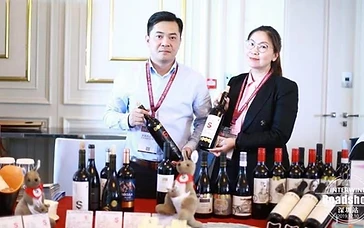
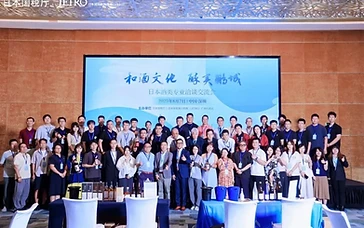
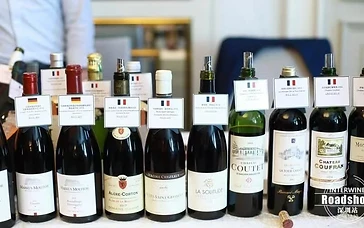
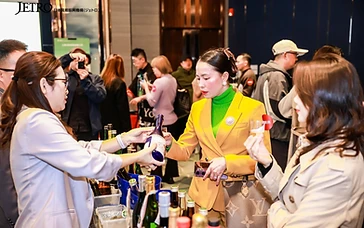
Interwine (China International Wine & Spirits Exhibition) stands out as mainland China’s longest-running professional wine and spirits exhibition. Held biannually in Guangzhou—the commercial heart of the Pearl River Delta and the South China market—Interwine serves as a vital bridgehead for international producers entering the country.
South China represents the largest imported wine consumption territory in China, supported by proximity to Hong Kong, developed logistics networks, and an established business culture around imported beverages. Key advantages for international producers include:
- Regional Commercial Depth: Rather than focusing purely on flagship Tier-1 accounts, Interwine gathers multi-tier distributors across Guangdong, Fujian, Hunan, and Guangxi.
- Targeted Buyer Profiles: Attendees consist of regional beverage wholesalers, private-label consolidators, enterprise gift procurement managers, and independent wine retail chains.
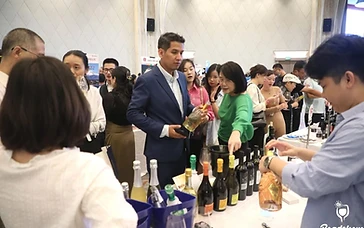
- Structured Engagement: The exhibition integrates commercial masterclasses, guided delegations, and pre-scheduled business matching to help overseas winemakers sit down directly with funded buyers.
Producers seeking scalable market entry across southern distribution networks can register to become an exhibitor to secure dedicated exhibition space and targeted buyer meetings.
2. ProWine Shanghai (East China)
Positioned in Shanghai, ProWine Shanghai brings the established European trade-fair format to East China. Running in tandem with Food & Hotel China (FHC), this exhibition attracts major multinational wine companies, national brand importers, sommeliers from five-star hotels, and coastal off-trade retail buyers.
- Audience: National importers, flagship retail buyers, high-end on-trade sommeliers, and Tier-1 distributors based around the Yangtze River Delta.
- Exhibitor Suitability: Best suited for wineries with established brand recognition, higher price points, or existing national importers needing to coordinate annual marketing activities with sub-distributors.
3. China Food and Drinks Fair / Tang Jiu Hui (Chengdu)
Commonly known as Tang Jiu Hui or the National Sugar and Wine Fair, this massive national fair held each spring in Chengdu, Sichuan, is China’s largest traditional FMCG gathering. Alongside the main exhibition venue, hundreds of unofficial hotel expos take over city hotels days before the official show begins.
- Audience: Large-scale domestic beverage distributors, national wholesalers, and Tier-3 through Tier-5 logistics distributors looking for high-volume commercial wine, bulk contracts, or OEM private labels.
- Considerations: The sheer scale can be overwhelming for smaller boutique estates. Costs for hotel suites and booth spaces are high, and the environment is characterized by intense price sensitivity. However, for volume-driven commercial brands seeking wide geographic distribution across central and western China, it represents unprecedented scale.
4. Vinexpo Asia (Hong Kong / Regional Alternation)
Vinexpo Asia acts as a strategic Pan-Asian gateway. While hosted in Hong Kong (and alternating with Singapore), the Hong Kong edition draws significant trade delegations from the Greater Bay Area and South China.
- Audience: Regional duty-free operators, Pan-Asian distributors, fine-wine merchants, and cross-border traders.
- Considerations: While excellent for regional Asia-Pacific brand positioning, Mainland Chinese buyers require cross-border travel arrangements to attend, making regional mainland expos more direct for contracting with provincial wholesalers.
Strategic Comparison Matrix for International Producers
| Trade Fair | Primary Location | Primary Geographic Reach | Primary Buyer Category | Commercial Strategy Fit | | :--- | :--- | :--- | :--- | :--- | | Interwine China | Guangzhou | South China & Greater Bay Area | Regional importers, wholesalers, enterprise buyers, specialized retailers | Market entry, securing multi-regional agents, volume retail distribution | | ProWine Shanghai | Shanghai | East China & National Tier-1 | National importers, luxury hospitality, premium retail chains | Brand positioning, fine wine placement, national distributor support | | Tang Jiu Hui (CFDF) | Chengdu | Central, Western, & National China | Traditional domestic distributors, mass wholesalers, OEM traders | High-volume commercial contracts, private labeling, deep-tier distribution | | Vinexpo Asia | Hong Kong | Pan-Asia & Greater Bay Area | Regional merchants, duty-free groups, fine-wine portfolio managers | Regional branding, cross-border trading, high-net-worth fine wine accounts |
Practical Evaluation Criteria: Selecting the Right Exhibition
Committing exhibition budget, shipping sample cases, and sending export personnel to China involves significant upfront capital. To select the right platform, export directors should evaluate three operational benchmarks:
Commercial Model and Price Point
Your winery’s price point directly dictates your target region. According to the USDA Foreign Agricultural Service (2025), while lower- and mid-tier commercial wines have faced retail headwinds, specific categories like estate-bottled whites, premium sparkling wines, and structured regional benchmarks continue to generate stable commercial returns.
- If your product retails at high-volume entry pricing (under $3-$4 FOB), platforms with vast distributor networks like Chengdu provide bulk exposure.
- If your brand targets the $5-$15 FOB mid-market space, commercial regional trade shows such as Interwine Guangzhou connect you directly to private enterprise buyers and regional off-trade accounts searching for authentic estate offerings.
- If your portfolio consists exclusively of ultra-premium, boutique allocations (above $30 FOB), focused metropolitan showcases in Shanghai or Hong Kong match luxury HoReCa demand.
Target Regional Demographics
China is not a uniform market. South China (Guangdong) leads the country in overall imported alcohol clearance, consumption, and disposable wealth. Consumers in the Greater Bay Area show a mature palate with an appreciation for balanced food-and-wine pairings, dry styles, and varied origins.
Conversely, East China (Shanghai, Zhejiang, Jiangsu) is driven by international dining trends, Western-style lifestyle bars, and specialty retail. Before booking your stand, review our ongoing market insights to cross-reference your wine style with regional consumer preferences.
Show Organizer Support Services
Exhibiting successfully in China requires navigating logistical and linguistic hurdles. When comparing trade shows, evaluate the operational support provided by the organizers:
- Sample Logistics and Customs Clearance: Does the fair partner with bonded logistics providers to clear tasting samples and handle duty payments smoothly?
- Business Matching Capabilities: Does the platform offer pre-arranged 1-on-1 meetings with vetted buyers, or are you dependent entirely on casual walk-by foot traffic?
- Bilingual Support: Are local liaison staff available to translate commercial technical sheets and handle distributor inquiries?
Maximizing ROI: Pre-Show and On-Site Execution
Wineries often make the mistake of assuming that simply renting a booth guarantees commercial contracts. Maximizing return on investment requires careful pre-fair preparation and structured on-site execution.
1. Preparation of Localized Marketing Assets
Distributor meetings in China move quickly. Ensure all technical information is immediately accessible on Chinese platforms:
- Digital Technical Sheets via WeChat: Create Chinese-language digital sell sheets easily shareable via WeChat QR codes. Print materials are often discarded, but digital spec sheets saved to a buyer's smartphone remain active references.
- Brand Chinese Naming: Establish an official, phonetically appealing Chinese name for your winery and brand. Ensure your trademark is registered with the China National Intellectual Property Administration (CNIPA) before exhibiting to protect your brand equity.
- Clear Pricing Frameworks: Arrive prepared with explicit FOB and CIF pricing tiers. Clearly delineate minimum order quantities (MOQs), container consolidation options, and marketing allowance expectations.
2. Regulatory and Compliance Verification
Do not wait until a buyer requests a commercial invoice to verify your import compliance:
- GACC Registration: Under Decree 248, all overseas food and beverage manufacturing facilities must be officially registered with the General Administration of Customs China. Ensure your registration number is active and ready to display.
- Label Compliance: Familiarize your team with national standard GB 7718 requirements for back labels, including alcohol declarations, mandatory allergen warnings, and ingredient lists.
3. Post-Show Follow-Up Discipline
Chinese business communications happen on WeChat and phone calls rather than through extended email threads. Within 48 hours of collecting buyer contact cards, send a direct WeChat follow-up message referencing your booth discussion, complete with digital portfolio PDFs and clear pricing matrices. Importers evaluate international partners based on operational responsiveness; prompt follow-up sets dependable wineries apart from passive participants.
Conclusion
Navigating China’s imported wine landscape demands focus, regional precision, and active commercial engagement. Rather than relying on generic trade missions, international wineries must choose exhibitions that align with their pricing structure, logistical capacities, and target regional demographics.
For estates targeting South China and the commercially vibrant Greater Bay Area, Interwine China provides a premier direct route to qualified regional importers, enterprise procurement networks, and long-term brand partners. Explore our upcoming exhibition calendar, review the full exhibitor directory, and reserve your booth by applying to become an exhibitor today.
Sources
- USDA Foreign Agricultural Service (2025): Wine Market Update 2025 - People's Republic of China (CH2025-0190). https://apps.fas.usda.gov/newgainapi/api/Report/DownloadReportByFileName?fileName=Wine+Market+Update+2025_Shanghai+ATO_China+-+People%27s+Republic+of_CH2025-0190.pdf
- General Administration of Customs of the People's Republic of China (GACC): Decree 248 - Provisions on the Registration and Administration of Overseas Manufacturers of Imported Food. http://www.customs.gov.cn/
- Wine Australia (2024): Market Bulletin - China Wine Import Market Dynamics and Regulatory Landscape. https://www.wineaustralia.com/news/market-bulletin/
- Ministry of Commerce of the People's Republic of China (MOFCOM): Trade Policy and Tariff Data Reports. http://english.mofcom.gov.cn/
Key Takeaways
- —Regional trade specialization matters: Interwine Guangzhou leads access to South China and the Greater Bay Area, ProWine serves East China Tier-1 channels, and Tang Jiu Hui targets national mass distribution.
- —Data from GACC via the USDA (2025) confirms China imported $1.6 billion in wine in 2024, with increasing demand for estate-bottled whites, sparkling wines, and agile commercial brands.
- —Exhibiting wineries must secure GACC Decree 248 facility registration and prepare clear FOB/CIF price matrices before arriving at Chinese trade fairs.
- —On-site conversion relies on digital localized collateral (WeChat sell sheets) and rapid 48-hour follow-up via direct messaging channels rather than traditional email.
- —Trade fairs remain the primary venue where qualified Chinese importers verify authenticity, negotiate exclusive contracts, and establish long-term supply relationships.
Frequently Asked Questions
Which wine trade show in China is best for entering the South China market?
Interwine China in Guangzhou is the premier platform for South China and the Greater Bay Area. Guangdong Province is China's largest wine-consuming and importing province, making Interwine the ideal venue for connecting with regional wholesalers, distributors, and private enterprise buyers.
What regulatory registrations must an international winery complete before exhibiting in China?
Wineries must be registered with the General Administration of Customs China (GACC) under Decree 248 before commercial shipments can clear customs. While sample shipments for tasting booths can often be imported under bonded exhibition quotas, securing your active GACC registration number beforehand builds immediate trust with serious buyers.
How do Chinese wine trade shows differ from European fairs like ProWein or Vinexpo Paris?
European shows typically focus on pan-continental distributor accounts and centralized retail purchasing. Chinese trade shows are more regionally segmented. In China, distributors operate within specific provincial jurisdictions, and business negotiations rely heavily on mobile-first communication (WeChat) and immediate relationship-building rather than long-term annual contract cycles.
Is it better to participate in a dedicated wine expo or a general food and hospitality fair?
Dedicated wine trade exhibitions like Interwine deliver higher B2B conversion for wineries because attendees are pre-screened professional beverage buyers, sommelier consultants, and specialty importers. General food fairs draw massive consumer and food service traffic, but wine stands can easily become diluted among unrelated FMCG categories.
What pricing format do Chinese wine importers expect at trade fairs?
Chinese importers expect clear Free On Board (FOB) price tiers in either USD or EUR, along with tiered minimum order quantities (MOQs). Having ready calculations for Cost, Insurance, and Freight (CIF) to major Chinese ports like Guangzhou, Shenzhen, or Shanghai demonstrates logistical maturity.